Clocks
A time is three quantities you can see: the hour as that many dots, every ten minutes as one ten-triangle, and the minutes left over as loose dots. Pick a clock.
Clock faces
A round face with hands, every number written in dots, and the time drawn as quantities underneath.
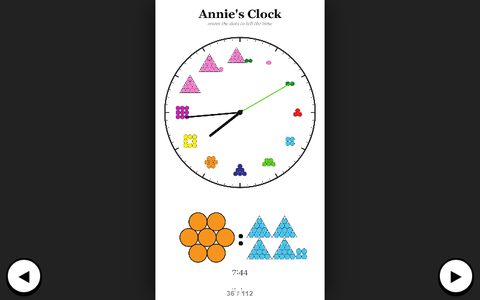
Annie's Clock
Count the dots round the face to tell the time, in Annie's own colors.
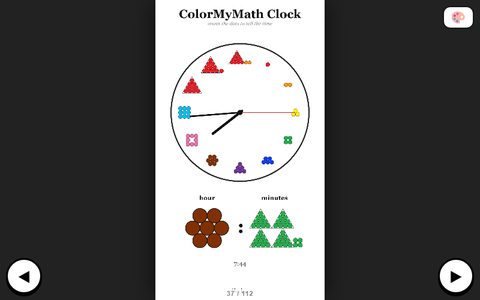
ColorMyMath Analog Clock
Hands and dots in the ColorMyMath colors; 50 minutes is five ten-triangles standing like a 5.
About Time — the time falls
The time as colored pieces with real physics. Read it while it is still, then it drops, floats or bounces. Oldest first.
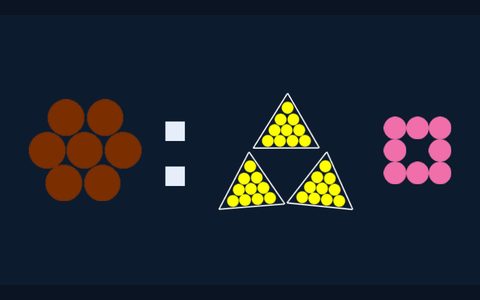
About Time
The main clock: hour, tens of minutes and minutes fall as pieces. Tap to drop, tilt to tumble.
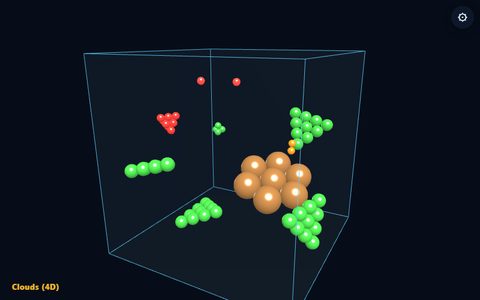
About Time 4D — Clouds
The time floating in a deep 3D tank; change the shape of the hour, the tens and the ones.
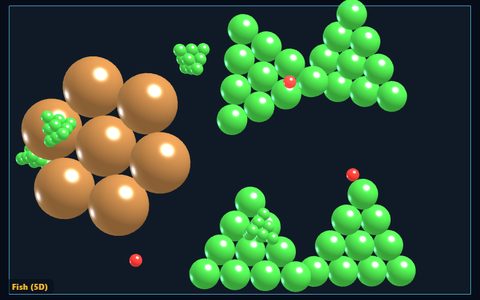
About Time 5D — Fish Tank
A flat-on tank so the time always reads H:MM; seconds swim in as little dots.
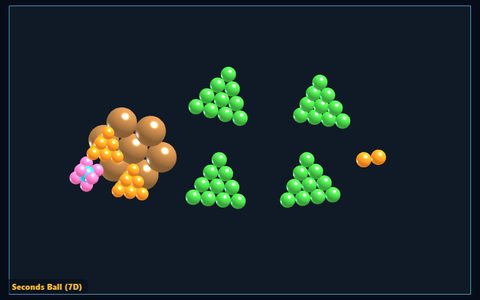
About Time 7D — Seconds Ball
All the seconds in one ball, grouped in tens: 37 seconds is three tens and a 7.
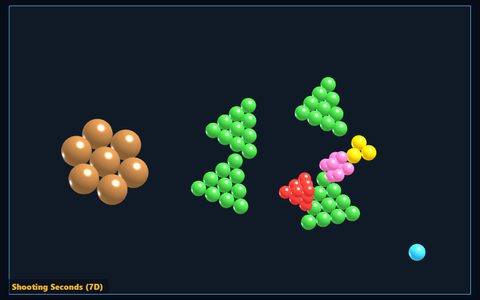
About Time 7D — Shooting
Every second is shot in from the side, the seed of a tap-a-side multiplication clock.
60 seconds
Ways to watch the seconds add up to one minute. Each clears at :00 and starts again.
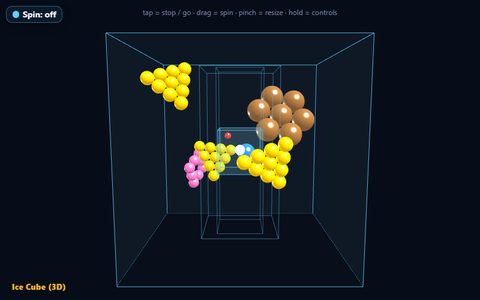
Adding Cube
Seconds drop into a little cube and add up: 1 + 1 = 2, 2 + 4 = 6.
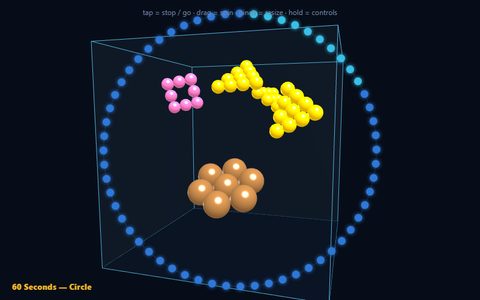
Seconds Circle
One dot a second crawls round a ring; a full ring is one minute.
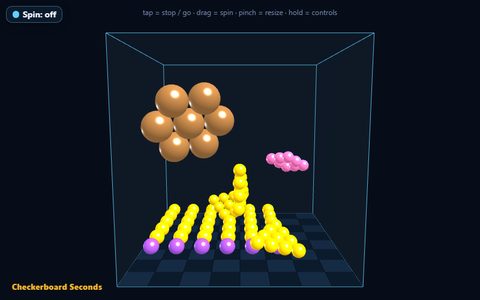
Checkerboard
Seconds grow as squares on the floor: 16 is a 4 by 4, ten red and six purple.
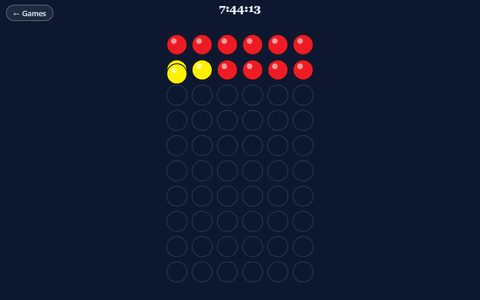
Counting Seconds
Sixty places fill one a second, and every finished ten takes its tens color.
Sandboxes
Working copies of the About Time clocks, kept as starting points for the next idea. They run; they just are not new clocks yet.
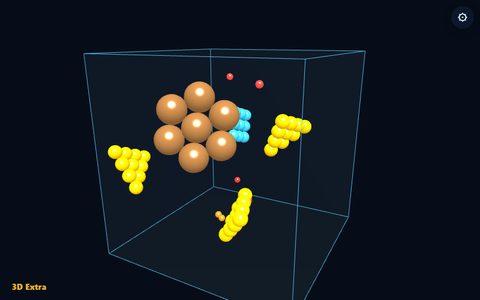
About Time 3D Extra
A copy of the Clouds clock to try ideas on.
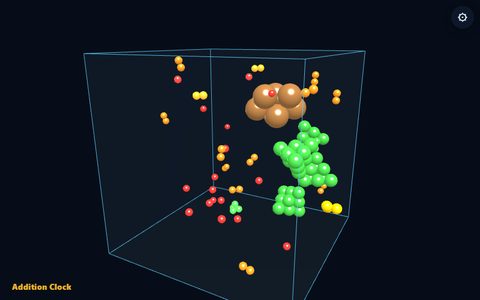
Addition Clock
Hour and minute balls in a tank, the start of a clock that adds.
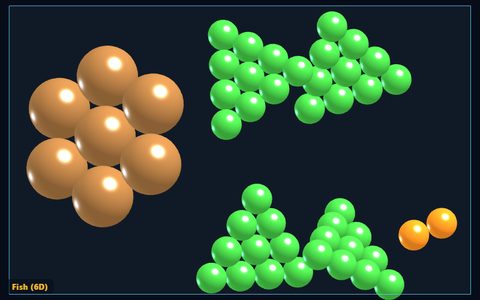
About Time 6D
A copy of the 5D fish tank, ready for the next idea.
One a day — read it & set it
A new clock every morning, oldest first and the newest at the end. Set the Clock is the one that asks you: read a time from the dots, then build one.
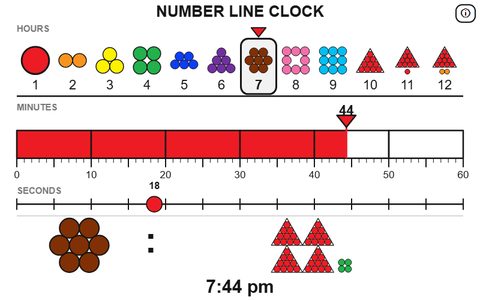
Number Line Clock
The time walked out on number lines: hours 1 to 12, minutes as six tens filling up, seconds crawling along.
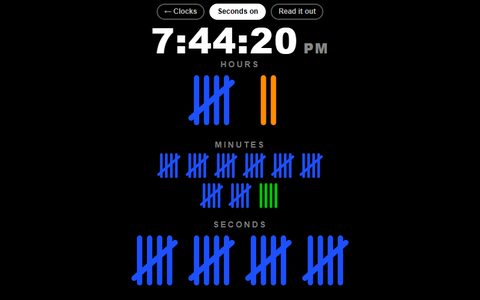
Tally Time
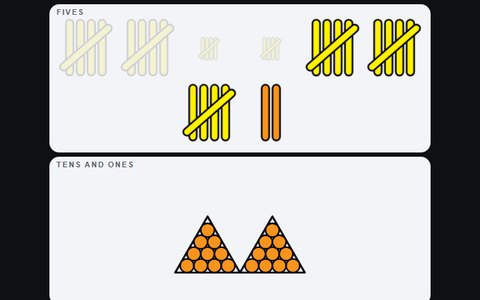
Minutes go in fives, so count them in bundles of five: 41 is eight fives and one more.
Fives Make Tens
A game from Tally Time: two bundles of five snap into one ten-triangle, and a ten opens back into two fives. 37 is seven fives and two, three tens and seven.
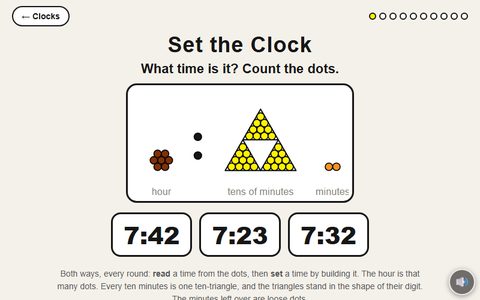
Set the Clock
Read a time from the dots, then build a time from its numbers. Both ways, ten goes a round.
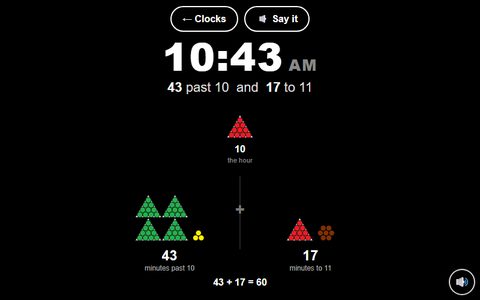
Past and To
Minutes past the hour and minutes to the next, as tens and ones: 43 past and 17 to always make 60.
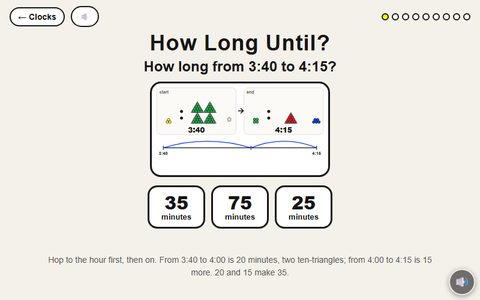
How Long Until?
How long from 3:40 to 4:15? Hop to the hour, then on. Then set the time later, and earlier.
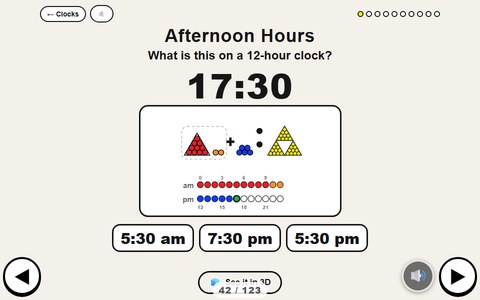
Afternoon Hours
The 24-hour clock: 17:30 is twelve and five more, 5:30 pm. Read it and set it.
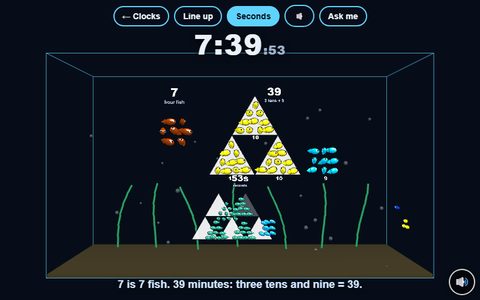
Number Fish (4D)
The time swims as schools of number-fish. Every ten minutes is a school of ten in a triangle; watch 39 become 40, and sixty seconds become one minute fish. Ask me: read the fish, then feed the tank.
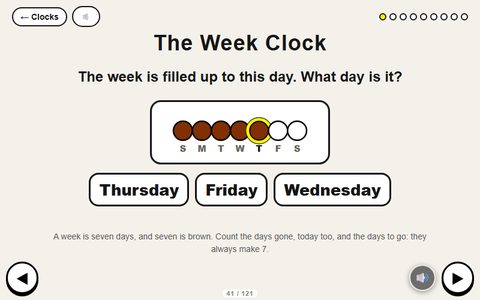
The Week Clock
The week as seven brown dots: which day it is, days gone and days to go, how many days until.
The Sixty Chart
The minutes fill a chart of 6 rows of ten: every full row is a ten, so 10:43 is four full rows and three more, 43 gone and 17 to go. Read the chart and fill it to set a time. Oct 18
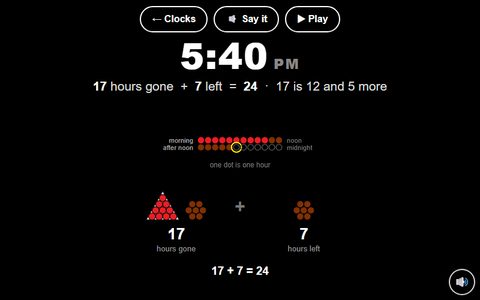
The Day So Far
The whole day as 24 dots, the morning row and the after-noon row: the hours gone fill up and the hours left stay empty, so at 5 in the afternoon 17 are gone (twelve and five) and 7 are left, 17 + 7 = 24. Read it and set it. Oct 19
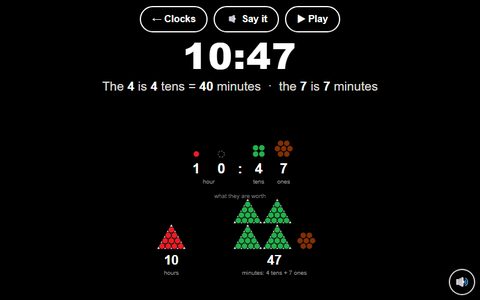
Every Digit a Pile
Every digit of the time as its own pile of dots, so 10:47 is one red dot, an empty place, four green and seven brown; then what each digit is worth: the four green dots in the tens place are four tens, forty minutes. Read it, say what a pile is worth, and set it. Oct 20
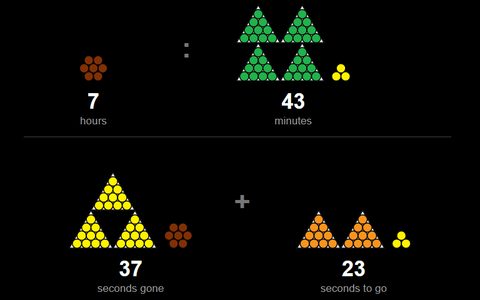
Seconds into Tens
The seconds pile up one dot at a time and close into a ten-triangle at every ten; six tens make a minute and the minutes pile gets one more. Seconds gone and seconds to go always make 60. Read the seconds, set them, and find how many to go and how many gone. Oct 24
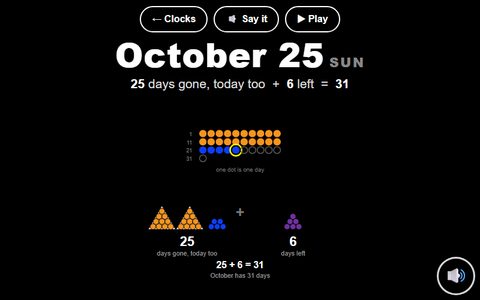
The Month Clock
The month as one dot for every day in rows of ten: the date is the days gone, today too, so the 25th is two tens and five; the empty rings are the days left, and 25 + 6 = 31. Months are 28, 29, 30 or 31 days. Read the date, read the days left, and set the date. Oct 25
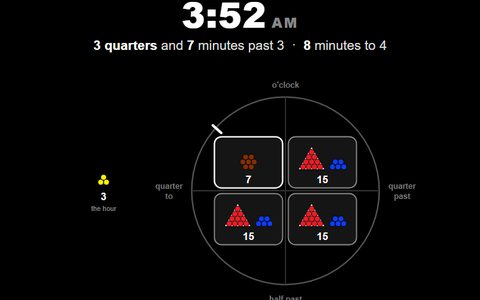
Quarters of an Hour
An hour cut into four quarters of fifteen minutes, each fifteen a ten and a five: quarter past is one full quarter, half past two, quarter to three, and four make sixty. Quarter to names the coming hour, so 3:45 is quarter to 4. Read the time from the quarters and set it both ways. Oct 26
Fives Round the Face
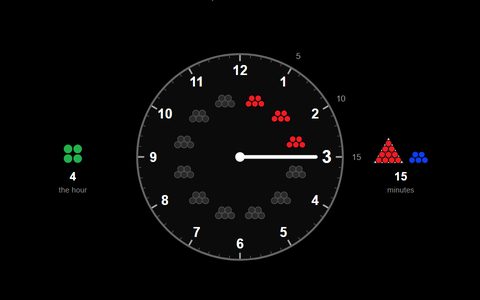
A round face where every step of the minute hand from one number to the next is a five, drawn as five dots: the hand on the 3 has gone past three fives, 15 minutes, not 3. The fives wear the tens digit's color (three red fives are one red ten), the fives still to go stay gray, and gone and to go make twelve fives, sixty minutes. Read it and set it, past and to. Oct 28
The Year Clock
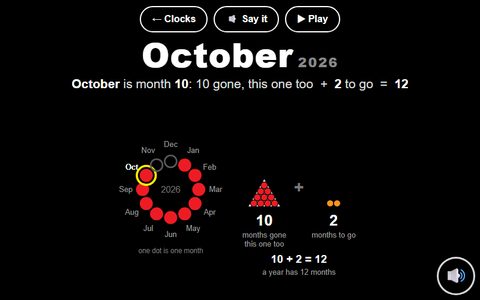
The twelve months as twelve touching dots in a ring, standing where the hours stand on a clock face: January at the 1, October at the 10, December at the top. The months gone, this one too, are filled in the colors of the month's number (October is ten red dots, one red ten), the months to go are empty rings, and gone and to go always make 12. Read which month it is and how many are to go, and set a month. Oct 29
The Countdown
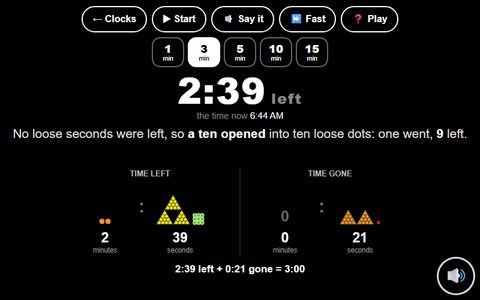
A timer that counts BACK as tens and ones: the minutes left are dots, the seconds left are ten-triangles and loose dots, and when the loose seconds run out a ten opens into ten loose dots (2:40, one second goes, 2:39); at 3:00 a whole minute opens into six tens (2:59). Time gone counts up beside it, and left and gone always make the timer. Read it, set it, one second later and one second before. Oct 30
An Hour Ago, An Hour From Now
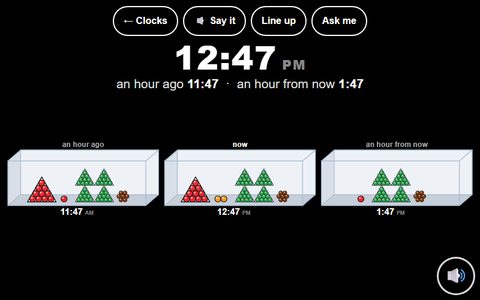
Three glass tanks of floating balls, an hour ago, now and an hour from now: the minutes stay the same and the hour pile is one ball fewer and one ball more, and after 12 it goes round to 1 (12:59 then 1:59, not 13:59). The time lines up to be read, then floats. Read it and make it, back and forward. Oct 31
Over Sixty
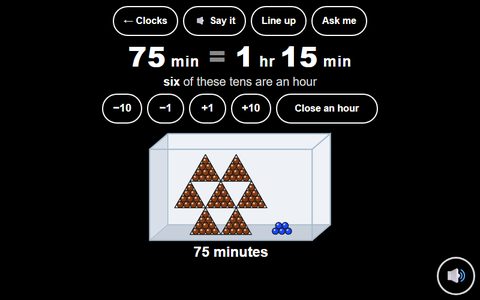
75 minutes is an hour and 15: in a glass tank of floating balls, six of the seven brown ten-triangles of minutes close into ONE hour ball, and what is left is one red ten and five. And back: the hour opens into six tens, so 1 hour 20 is 80 minutes, not 120. An hour bundles at six tens, not ten; under 60 nothing closes. Nov 1
Tenths of a Second
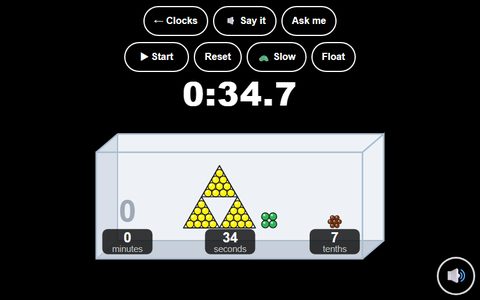
A stopwatch in a glass tank of floating balls: every tenth of a second one more small dot, and at the tenth tenth the ten small dots close into ONE ten-triangle that flies into the seconds as one second, the way ten ones close into a ten. Stop it and read 4.7 as 4 seconds and 7 tenths, not 47 and not 11. And back: make 3.5 by tapping, and to take a tenth from 4.0 a second opens into ten tenths first. Minute dots are bigger than second dots, tenth dots smaller. Nov 2
Days to Your Birthdaynew
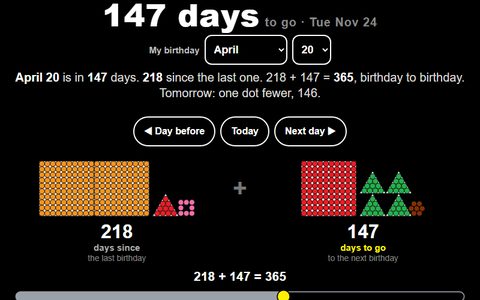
Pick your birthday: the days until it drawn as hundreds, tens and ones (hundred-squares, ten-triangles, loose dots), one dot fewer every morning, and the days since the last one beside it, always making the year: 218 since + 147 to go = 365. Step a day and watch 200 break into 199. Then both ways: read the days from the picture, build a number of days with hundreds, tens and ones, and find the days since. The slips named: tens and ones swapped, a hundred counted as a ten, the days to go given for the days since, taking the small digit from the big one in every place instead of opening a ten. Nov 24
See every new clock and cube game, newest first →
Free, no ads, nothing sold to children · Keep it free · Privacy